 Timon Scholz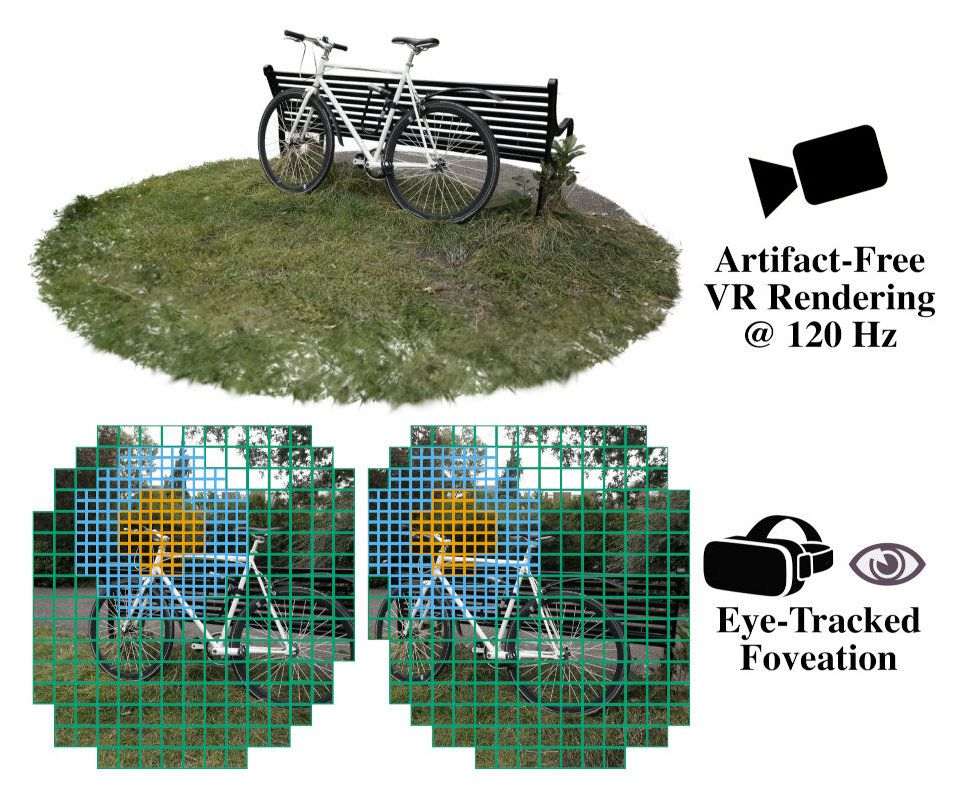
Fast Eye-Tracked 3D Gaussian Rendering for Virtual Reality
Oral Presentation Gaussian SplattingVirtual realityFoveated renderingEye trackingImage-based renderingRasterization
Proc. Vision, Modeling and Visualization (VMV), 2026
Computer Graphics Lab,
TU Braunschweig Timon Scholz, Computer Graphics Lab,
TU Braunschweig Florian Hahlbohm, Computer Graphics Lab,
TU Braunschweig Martin Eisemann, Computer Graphics Lab,
TU Braunschweig
Cluster of Excellence PhoenixD,
Leibniz University Hannover Susana Castillo, Computer Graphics Lab,
TU Braunschweig
University of New Mexico,
USA Marcus Magnor
VR-HTGS enables artifact-free, eye-tracked foveated rendering of 3D Gaussian Splatting in VR at 120+ Hz by dynamically adapting the tile-based rasterizer to a heterogeneous tile layout following the gaze position, without sacrificing perceptual quality or model fidelity.
Measuring Velocity Perception Regarding Stimulus Eccentricity
Oral Presentation VectionCybersicknessVirtual realityVelocity perceptionStimulus eccentricity
ACM Symposium on Applied Perception (SAP), 2024
Computer Graphics Lab,
TU Braunschweig Timon Scholz, Computer Graphics Lab,
TU Braunschweig Colin Groth, Computer Graphics Lab,
TU Braunschweig Susana Castillo, Computer Graphics Lab,
TU Braunschweig Martin Eisemann, Computer Graphics Lab,
TU Braunschweig Marcus Magnor
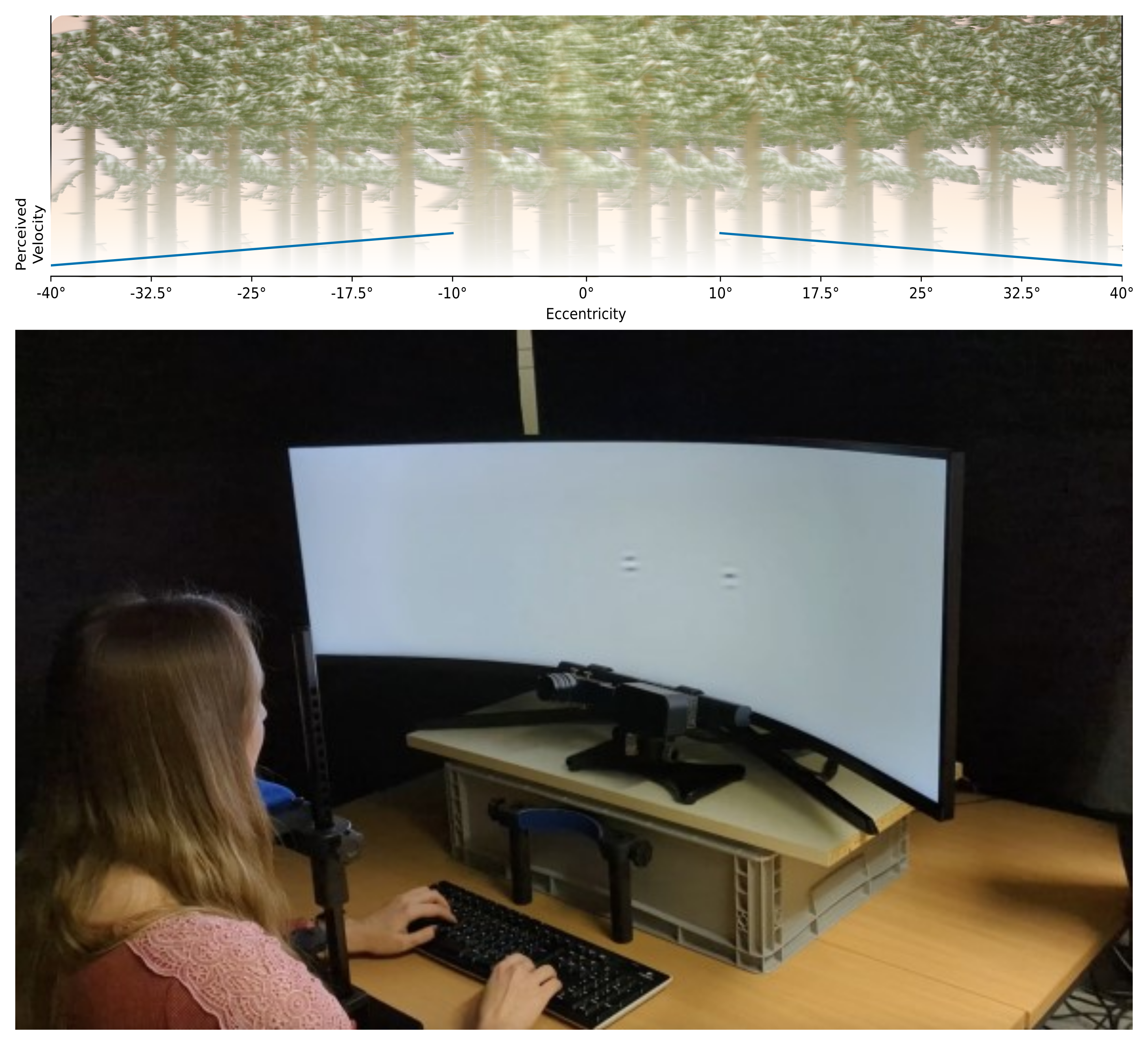
We investigate the influence of temporal frequency and eccentricity of a stimulus on the magnitude of perceived velocity in the periphery, building a model to predict the scaling factor for perceived velocity deviations relative to eccentricity.
Instant Hand Redirection in Virtual Reality Through Electrical Muscle Stimulation-Triggered Eye Blinks
Hand redirectionEMSVirtual realityRedirectionVREye blinksEye tracking
ACM Symposium on Virtual Reality Software and Technology (VRST), 2023
Computer Graphics Lab,
TU Braunschweig Colin Groth, Computer Graphics Lab,
TU Braunschweig Timon Scholz, Computer Graphics Lab,
TU Braunschweig Susana Castillo, Computer Graphics Lab,
TU Braunschweig Jan-Philipp Tauscher, Computer Graphics Lab,
TU Braunschweig Marcus Magnor
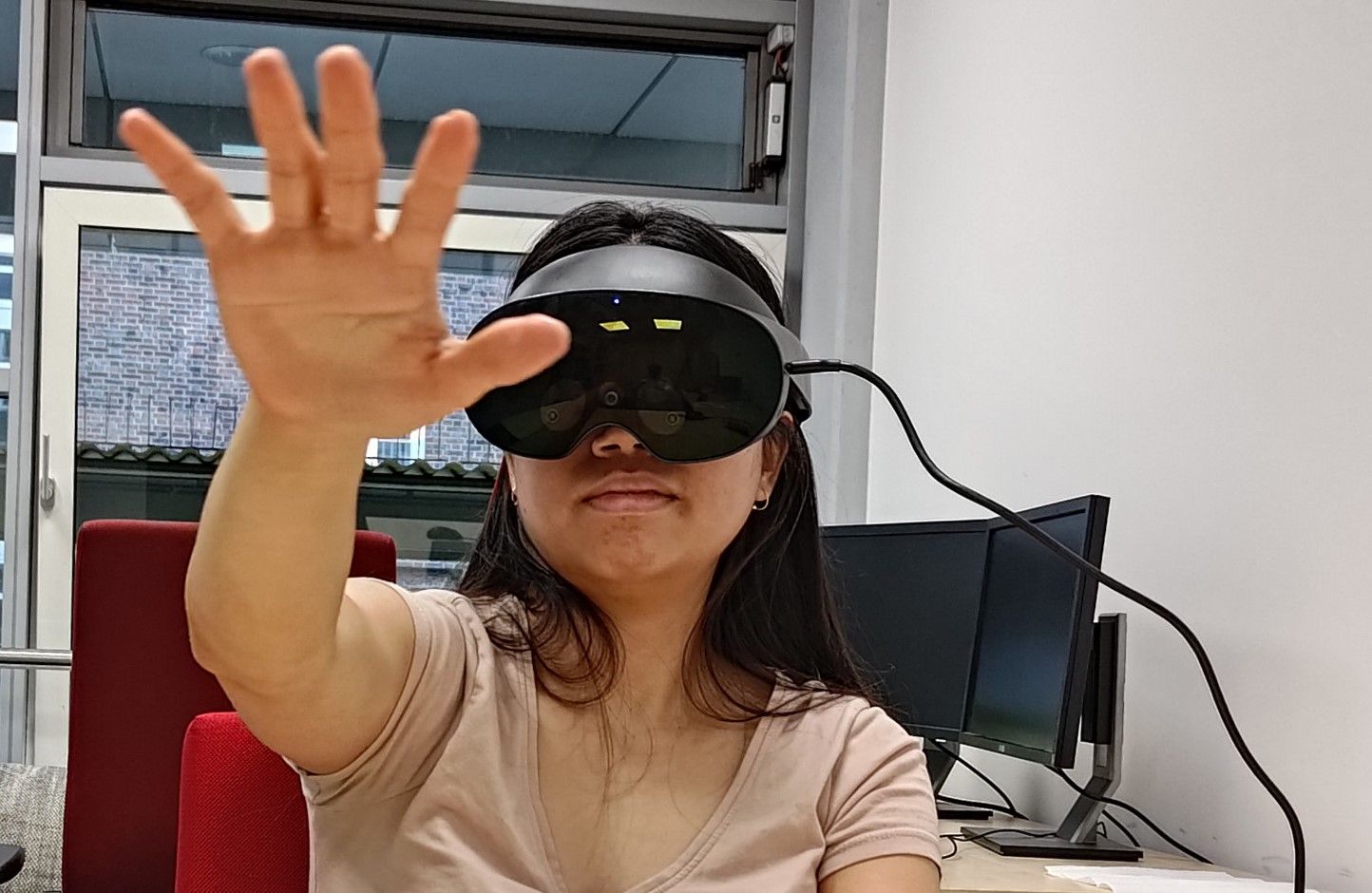
We propose a method for instant hand redirection in VR using electrical muscle stimulation (EMS) to trigger eye blinks, enabling seamless interaction between real and virtual objects.
© Website by Timon Scholz, 2026 · commit 8b9bc89