 Timon Scholz
Timon Scholz
👋 Hi there! I'm a PhD student under the supervision of Prof. Dr.-Ing. Marcus Magnor at the Computer Graphics Lab of the TU Braunschweig. My research focuses on Novel View Synthesis and VR Perception.
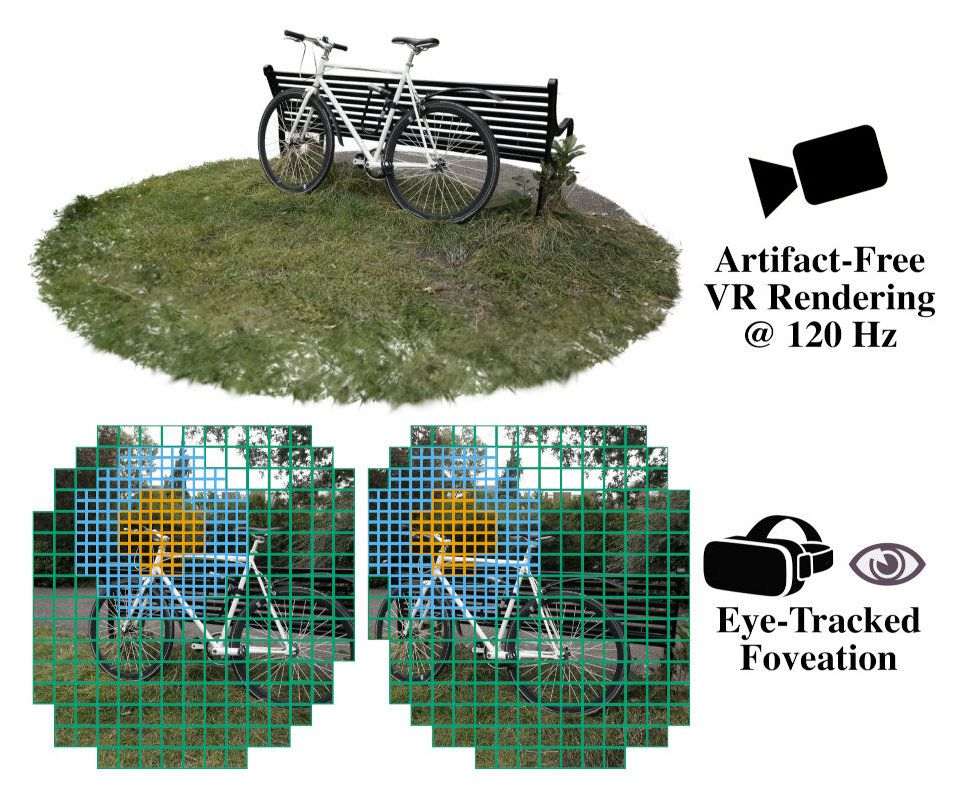
Fast Eye-Tracked 3D Gaussian Rendering for Virtual Reality
Proc. Vision, Modeling and Visualization (VMV), 2026
Computer Graphics Lab,
TU Braunschweig Timon Scholz, Computer Graphics Lab,
TU Braunschweig Florian Hahlbohm, Computer Graphics Lab,
TU Braunschweig Martin Eisemann, Computer Graphics Lab,
TU Braunschweig
Cluster of Excellence PhoenixD,
Leibniz University Hannover Susana Castillo, Computer Graphics Lab,
TU Braunschweig
University of New Mexico,
USA Marcus Magnor
VR-HTGS enables artifact-free, eye-tracked foveated rendering of 3D Gaussian Splatting in VR at 120+ Hz by dynamically adapting the tile-based rasterizer to a heterogeneous tile layout following the gaze position, without sacrificing perceptual quality or model fidelity.
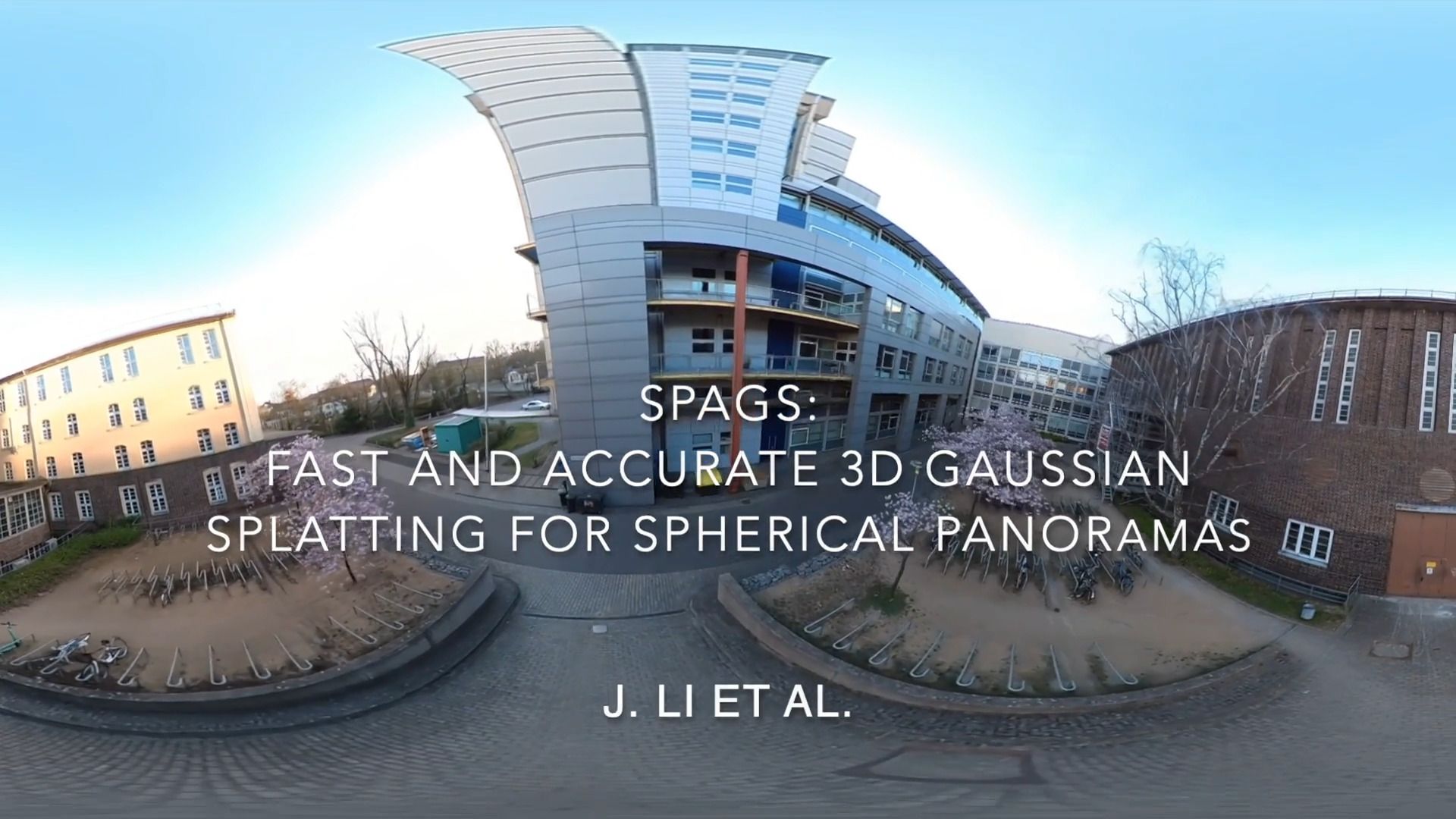
SPaGS: Fast and Accurate 3D Gaussian Splatting for Spherical Panoramas
EGSR 2025 (CGF Journal Track), 2025
Computer Graphics Lab,
TU Braunschweig Junbo Li, Computer Graphics Lab,
TU Braunschweig Florian Hahlbohm, Computer Graphics Lab,
TU Braunschweig Timon Scholz, Computer Graphics Lab,
TU Braunschweig Martin Eisemann, Computer Graphics Lab,
TU Braunschweig Jan-Philipp Tauscher, Computer Graphics Lab,
TU Braunschweig
University of New Mexico,
USA Marcus Magnor
SPaGS enables high-quality, real-time free-viewpoint rendering from 360-degree panoramic images by introducing a new method for computing axis-aligned bounding boxes for spherical images that significantly accelerates omnidirectional ray casting of 3D Gaussians
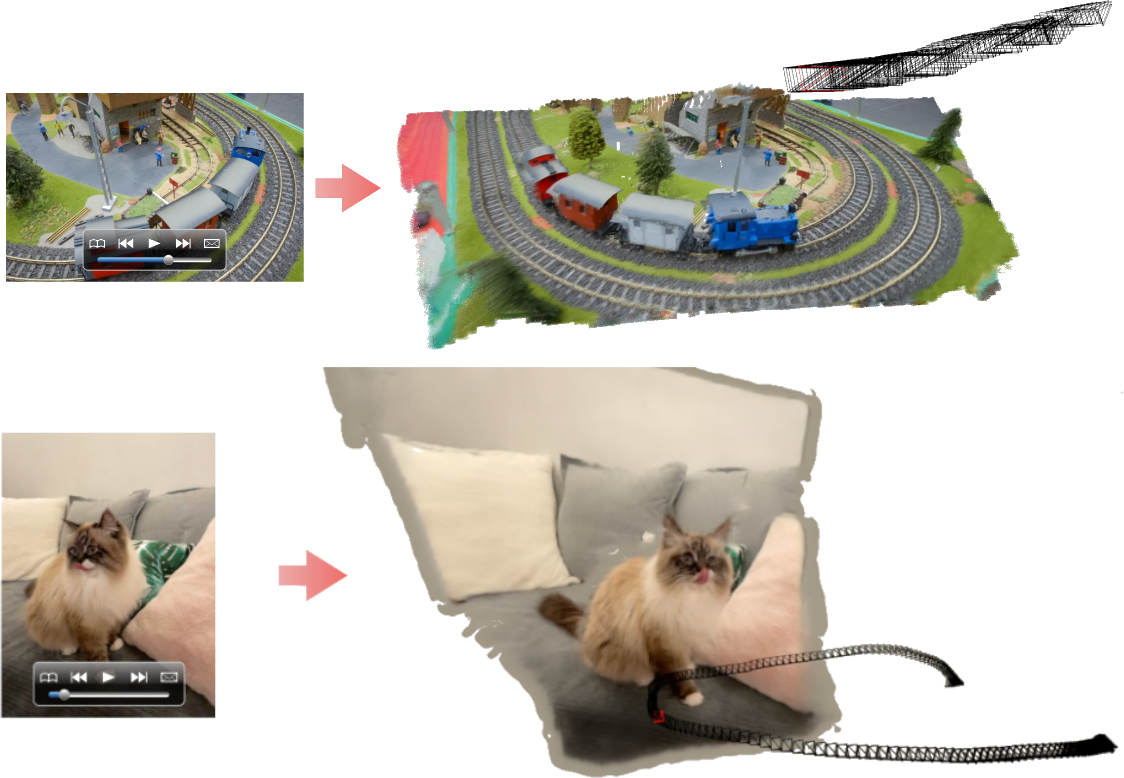
D-NPC: Dynamic Neural Point Clouds for Non-Rigid View Synthesis from Monocular Video
Eurographics (Computer Graphics Forum), 2025
Computer Graphics Lab,
TU Braunschweig Moritz Kappel, Computer Graphics Lab,
TU Braunschweig Florian Hahlbohm, Computer Graphics Lab,
TU Braunschweig Timon Scholz, Computer Graphics Lab,
TU Braunschweig Susana Castillo, Max Planck Institute for Informatics,
Saarland Informatics Campus Christian Theobalt, Computer Graphics Lab,
TU Braunschweig Martin Eisemann, Max Planck Institute for Informatics,
Saarland Informatics Campus Vladislav Golyanik, Computer Graphics Lab,
TU Braunschweig Marcus Magnor
D-NPC enables fast, non-rigid view synthesis from monocular video by expanding extending Implicit Neural Point Clouds (INPC) to the temporal domain.
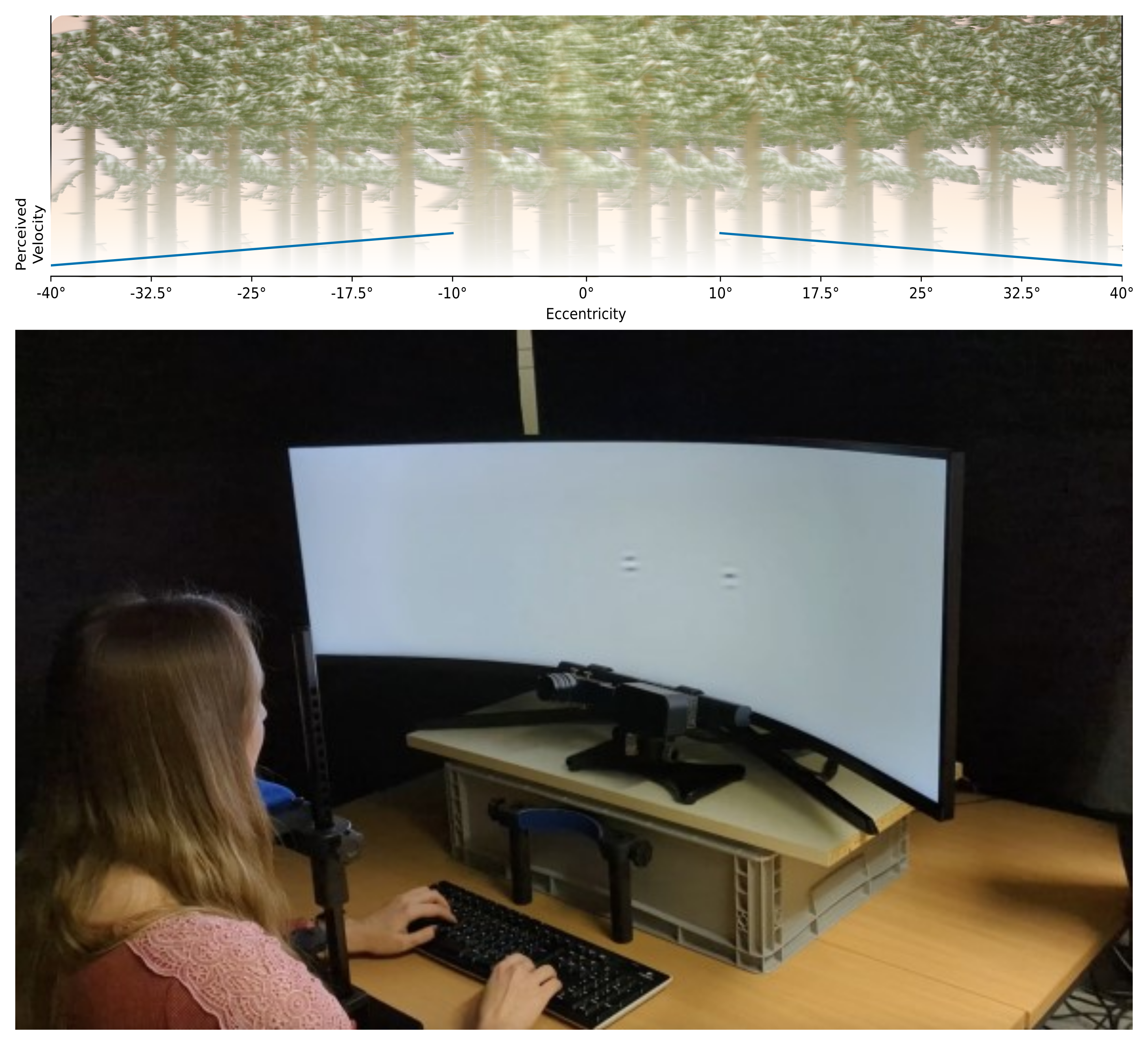
Measuring Velocity Perception Regarding Stimulus Eccentricity
ACM Symposium on Applied Perception (SAP), 2024
Computer Graphics Lab,
TU Braunschweig Timon Scholz, Computer Graphics Lab,
TU Braunschweig Colin Groth, Computer Graphics Lab,
TU Braunschweig Susana Castillo, Computer Graphics Lab,
TU Braunschweig Martin Eisemann, Computer Graphics Lab,
TU Braunschweig Marcus Magnor
We investigate the influence of temporal frequency and eccentricity of a stimulus on the magnitude of perceived velocity in the periphery, building a model to predict the scaling factor for perceived velocity deviations relative to eccentricity.
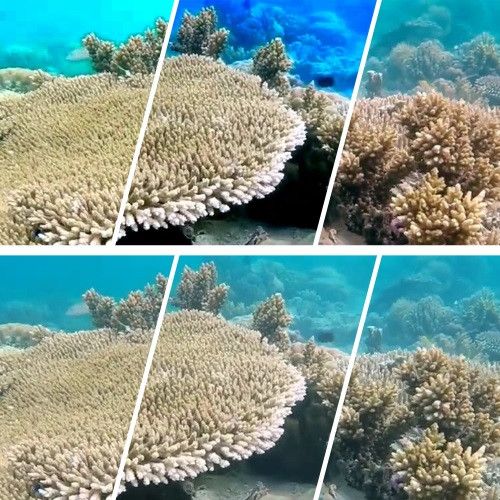
Optimizing Temporal Stability in Underwater Video Tone Mapping
Proc. Vision, Modeling and Visualization (VMV), 2023
Technische Universität,
Braunschweig Matthias Franz,Technische Universität,
Braunschweig Bill Matthias Thang,Technische Universität,
Braunschweig Pascal Sackhoff,Computer Graphics Lab,
TU Braunschweig Timon Scholz, Computer Graphics Lab,
TU Braunschweig Jannis Malte Möller, Computer Graphics Lab,
TU Braunschweig Steve Grogorick, Computer Graphics Lab,
TU Braunschweig Martin Eisemann
We present a method for temporal stabilization of depth-based underwater image tone mapping methods for application to monocular RGB video, improving color consistency across frames.
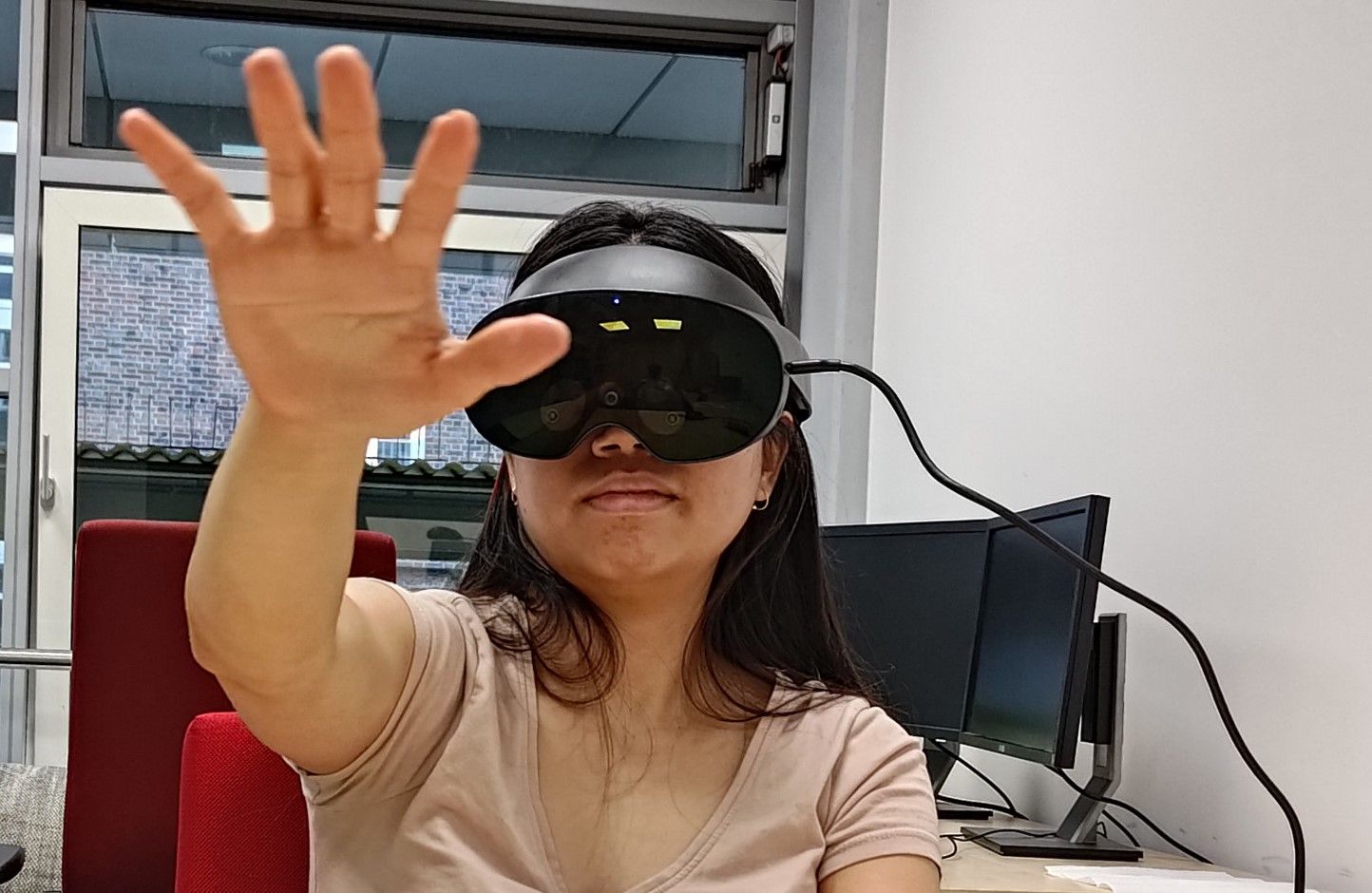
Instant Hand Redirection in Virtual Reality Through Electrical Muscle Stimulation-Triggered Eye Blinks
ACM Symposium on Virtual Reality Software and Technology (VRST), 2023
Computer Graphics Lab,
TU Braunschweig Colin Groth, Computer Graphics Lab,
TU Braunschweig Timon Scholz, Computer Graphics Lab,
TU Braunschweig Susana Castillo, Computer Graphics Lab,
TU Braunschweig Jan-Philipp Tauscher, Computer Graphics Lab,
TU Braunschweig Marcus Magnor
We propose a method for instant hand redirection in VR using electrical muscle stimulation (EMS) to trigger eye blinks, enabling seamless interaction between real and virtual objects.